Sunday, March 22, 2009

Slumdog Recycling

One of the best things that we did in Mumbai was visit the slum, Dharavi. Many of you would recognize the place as it is the the backdrop for the opening scene in Slumdog Millionaire. There is an NGO that runs an educational center in Dharavi that offers tours to small groups of people who want to see this way of life. The money from the tours goes back to the educational center and supports other projects that are happening in the slum. Seeing the squalid conditions in which people lived was definitely eye-opening, but what was way more fascinating was the amount of industry that was happening all around. Old computer monitors, plastic bottle is, large tin drums, cardboard boxes, anything that can be recycled is being recycled right there in Dharavi. Though in this context recycling does not refer to just sorting out the contents of the garbage into different categories. No in Dharavi each item goes through the entire sequence of processes until it is usable again. For example a plastic bottle is first melted, then colored, then transformed into large strands, then turned into pellets which are sold back to the outside so that they can be turned into buttons or zippers or some other part of one of the thousand plastic products that we mindlessly use everyday. Each one of these steps occurs in a separate micro-factory, which essentially consists of one machine and one worker. The whole concept of recycling takes on an entirely new meaning as you watch this process unfold on one of the many narrow streets deep within Dharavi. Seeing all of this gave me a totally new appreciation for the power and potential of recycling. Of course there is another side to this inspirational story. The conditions under which all this work takes place are extremely unsafe. We were told that the number of injuries and even deaths that occur while people work in these tiny rooms without much light or ventilation or safety equipment is quite high. And just standing there looking in from the outside it was often difficult to breath. Yet I'm not sure whether these single machine enterprises could afford to stay in business if they were forced to comply with safety and health regulations. And there you had a perfect example of the complexities of poverty alleviation through economic development.  These tiny micro-industries were providing thousands of people in Dharavi with jobs. To add a little bit of perspective to the size of this industry, Dharavi generates over $650 million dollars worth of income a year. This is an incredible number when considering that not too long ago this place was considered illegal and everyone living there were classified as squatters.  The success of Dharavi is another example of the price of development, while these industries employ a large number of workers it puts them at risk every day they go off to work. Seeing this place that was on one hand so inspirational and on the other hand so challenging made me think about why on so many occasions back in class we wrestled with these exact same questions.

To see some incredible photos of Dharavi check out:

http://ngm.nationalgeographic.com/2007/05/dharavi-mumbai-slum/jonas-bendiksen-photography

Saturday, March 21, 2009

Dharavi: Un paseo por las favelas de Bombay

"¡Quiero ir a una favela en Bombay!", me dice Kenny, en tono amenazador, . "¡OK OK!" le respondí en reclamo, pues nunca me hubiera negado. Y así, cuando nos embarcamos en un viaje a Bombay me aseguré de incluir el "Slum tour" en la agenda. Ya en sábado a medio día, en el centro de Bombay, nos metemos a una tiendita de electrónicos donde había un teléfono. Ahí pudimos contactar a los "Reality tours", una ONG que se dedica a llevar turistas por a Dharavi, la favela más grande de la ciudad. Quedamos de encontrarnos con el guía ese mismo día a las 5 de la tarde, en una estación de tren que está mucho más al norte de Colaba. Ibamos emocionados, abrazados en el tren, viendo la gente entrar y subir al vagón. Después de 20 minutos, un señor nos indicó para bajar pues el tren pasa muy rápido y no da mucho tiempo para leer los letreros de las estaciones. De hecho, hago un paréntesis para explicar la técnica de salir del vagón. Te posicionas cerca de la salida (sin puerta), y te pegas al lado donde va el tren, es decir, a la derecha. Pues una vez que el tren empieza a llegar a la nueva estación, la gente empieza a saltar en la entrada y si no vas muy pegado a la derecha, te pueden dar un buen golpe.
Llegamos a la estación y vimos a un europeo esperando, así que supimos que no nos habíamos equivocado. Ahi, esperamos con el europeo y otra americana al guía, quien llegó puntual y con prisa. Después de una rápida introducción al tour, empezamos a caminar alejándonos de la estación de tren y con una velocidad que casi períamos al guía de la vista. Llegamos a una calle muy ancha donde dimos vuelta, llena de puestos de comida, frutas y verduras, y todo lo que se denomina "puestos de la economía informal". Pasamos por un cine improvisado, y el guía nos lo señaló rápidamente. Todo era muy rápido que de pronto ya me estaba desanimando pues pensé que el guía tenía mucha prisa y quería acabar el tour rápido. Después entendí por qué.
Llegamos entonces a una parte más tranquila de la favela, donde habían mas casas. Ahí, al fin el guía nos dió la bienvenida y nos explicó que primero ibamos a pasar por esta sección un poco rápido pues ya era tarde, y no quería que nos "agarrara la noche". Nos pidió que por favor no tomáramos fotos, que no nos alejáramos mucho de él, y que a pesar de la dificultad para caminar, la basura, etc., no hiciéramos "caritas de fuchi" porque la gente se podía ofender.
Empezamos a caminar tratando de pisar los cartones que amortiguaban el barro del piso; esquivando los cables de electricidad que casi llegaban a la cabeza; y sobre todo, pasando de largo las miradas curiosas de los moradores de Dharavi. Primero, el guía nos llevó a conocer las industrias de Dharavi. Sí, Dharavi tiene cientos de industrias de papel, cartón, aluminio, plástico, donde la basura de Bombay se recicla y recupera su valor comercial. Con mis propios ojos pudimos ver la realidad de un trabajo a sueldo en las ciudades en desarrollo. (Llevo casi dos años investigando números sobre esto, y ahora puedo ver lo que significan). Al parecer, estas microfábricas son operadas por un solo hombre. Es decir, cada paso de la cadena productiva se hace en una micro-fábrica diferente, las cuales pertenecen también a un distinto dueño. Cada año, Dharavi produce millones de dólares, por estas industrias. Lo realmente impactante es ver pedazos de computadora, botellas de plástico, cajas de cartón, papel aluminio, y todo lo que denominamos "basura" convertido en un producto perfecto, hecho con tan pocos recursos.
Pasamos por el "río" el cual alimenta a la favela. Este olía muy mal pues no hace falta mencionar que esta contaminado. Después nos enteramos que aquí se grabó la parte de Slum Dog Millionaire en donde los niños corren huyendo de los policías. No pude resistir mis risitas de la emoción, por muy cliché que parezca.
Seguimos avanzando y fuimos a una panadería donde nos regalaron unas galletas deliciosas y nos tomaron fotos. Según esto, una de las panaderías que más venden en todo Bombay, y donde el horno nunca descansa pues se trabaja el pan las 24 horas del día. Llegamos a una plaza y nos ofrecieron chai, el cual tomamos con un poco de desconcierto, pero la duda solo duró pocos segundos. Habíamos dejado atrás la zona más pobre del Dharavi. Ahora sí, el guía pudo descansar pues estaba un poco preocupado por nosotros. Ahí, en el corazón de Dharavi, tomando chai, pudimos al fin reflexionar en todo lo que habíamos visto, olido, probado, escuchado y el guía nos contestaba todas nuestras preguntas.
Nos costó trabajo creer que todos los niños de la favela van a la escuela pero por lo menos no vimos ninguno pidiendo dinero. También el guía nos explicó que los dueños de las fábricas de las favelas son millonarios y que ya no viven más ahí, pero que la favela se ha vuelto para ellos el gran negocios de sus vidas. Tal vez por eso es tan difícil cambiar la situación de una ciudad perdida, puesto que por debajo de la superficie, la gente se beneficia de estas condiciones. Tanto la gente que vive ahí, tiene trabajo, una protección al llegar a la ciudad, y una comunidad. Y los dueños de la favela, obvio, continúan haciéndose millonarios. Por otro lado, las condiciones de este lugar son por debajo de los estándares de la dignidad. El agua no es potable, y faltan letrinas; los trabajadores de estas industrias tiene condiciones deplorables en su lugar de trabajo, pues no hay buena luz ni ventilación. Todo esto repercute en su salud.
Nuestro tour culminó en el centro comunitario de la favela donde existe una escuela y a donde esperamos que nuestar aportación con el tour sirva para educar a los niños que en ella habitan. Ahí tienen algunas computadoras y aprenden inglés. La educación fundamental del mundo de hoy, parece ser. Dejamos la favela y nos fuimos a Chowpati beach donde los niños sí piden monedas. Me pregunto si sólo en Dharavi la gente se salva.
With Shantaram in Mumbai

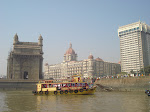
For those of you who have read the very large, yet totally thrilling novel called Shantaram than you will appreciate my fascination with Mumbai. Like me you will probably relish the fact that you are walking the same streets that Linbaba did on so many occasions. In the book the author paints the city of Mumbai as a place that is energetic, beautiful, fascinating and exotic. Though Ana Paula regrettably only spent two days there, I would personally use every one of those adjectives to describe India's metropolis on the sea. The city's energy and movement reminded me in some ways of New York, though its colors and style were purely its own. Since Bombay was such an important city in the days of the British they left behind many architectural gems like the Churchgate train station which many would recognize from the final scene in Slumdog Millionaire. 

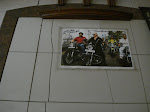
On our first morning I laid and bed in our expensive yet totally dirty hotel and dug into another chapter of Shantaram which while in Mumbai transformed from a novel into a guide book. This chapter opened up with a description of a small locals only joint that served up the best dosas in all of the city. Dosas are kind of a cross between a pancake and a crepe though they are not sweet and are often served with a potato like mash, a liquidy curry and coconut chutney. Now being a fanatic of this book and loving the idea of reading about what would under any other circumstances be a far away place and actually being able to go there only minutes later. Well not only were we greeted with the best dosas that we had eaten in our short tenure in India but there was also a signed photograph above our table of the man himself which somehow made our lives seem that much closer. The fact that there was another table of Shantaram tourists across from our did little to dampen my enthusiasm.

That night we went to Leopolds, the famous tourist haunt where a good deal of the book takes place. Though, more recently Leopolds gained fame for being one of the locations where the terrorists struck back in November. This part of history was really brought to life when we noticed that directly above Ana Paula's head was a bullet hole in the wall. Despite this little artifact it was kind of difficult to imagine such a tragic event when looking around at all the smiling faces of tourists and Indians alike as they sat there drinking beers and listening to the music.

Bombay's charm is as much about the architecture as it is its geography. Like Manhattan the city is actually an island though you don't really get that sense until you look at a map. What you do feel is its picturesque setting right on the water. Sadly the sea is very much polluted, but sitting on the beach at sunset looking at the beautifully bright colors of the women's sarees and the children's balloons makes you realize how wonderful of a place Chowpatty beach is. Mumbai is also famous for being the capital of Bollywood which means that it is home to the largest fim production industry in the world. While strolling out side the Taj Majal Hotel, another of Mumbai's most famous landmarks, and also one of the terrorists targets, we were approached by a woman who asked if we wanted to be extras in a Bollywood film that would be starring Kylie Mynogue. Here it was handed to us on a silver platter our chance at stardom, my heart was racing when I asked her when the shoot would be happening. Suddenly our potentially life changing opportunity slipped away when she told us it wasn't until the next day and tragically our flight was leaving that night. So we headed off of the Elephanta Island, and then Crawford market, ending the day eating deliscious Bengali food. Then as we walked out on the runway to board the plane back to Bangalore I thought about how much I enjoyed this place. You see normally I'm not such a big fan of cities as I feel like in general there are more similarities than differences, but as David Greggory repeatedly points out throughout his 935 page book, there is no place on earth like Bombay.

Wednesday, March 18, 2009

De yoga y gurús

Va a leerse muy cliché pero Kenny y yo hemos encontrado nuestro Gurú. Digamos que no lo buscamos, si no que él nos encontró. He aquí la historia de este encuentro.
Desde mucho tiempo atrás de llegar a la India, K y yo sentíamos que aprender yoga durante nuestro tiempo en Bangalore era algo obligatorio. Ya ambos éramos yogis citadinos en Washington y cuántas veces escuchamos a nuestros compañeros yogis decir que habían estado en tal o cual instituto de yoga, en tal y cual lugar de la India. Miles de personas vienen a la India cada año en búsqueda de una práctica más profunda o más pura, y es así que no estábamos dispuestos a dejar pasar esta oportunidad.
Nuestra primera semana en Bangalore transcurrió buscando alternativamente una nueva casa y una clase de yoga. Después de algunas llamadas a distintos lugares recomendados por el buscador askleila.bangalore.com, dimos con la primera clase de yoga Iyengar.
El día de la clase, había quedado con K de encotramos ahí, pues él se fué directametne del trabajo. Llegué tarde porque el chofer de mi autorickshaw se perdió. Esto es algo común en la India si no sabes exactamente dónde queda el lugar al que vas. El chofer espera que tu conduzcas con la mente y mientras él conduce sólo con las manos. Al fin, llegué al estudio 15 minutos tarde. Era una casa particular, con unas escaleras en el patio que daban a una habitación en el segundo piso. Abrí la puerta, y ví un salón amplio pero sumamente lleno. Toda la gente, excepto Kenny, era india. Las edades, de todas. Las formas, también. Me llamó la atención la ausencia de tapetillos o "yoga mats" que no pueden faltar en ninguna clase del occidente. El hecho que las mujeres usaran saris para hacer yoga, en lugar de pants y sofisticados tops que se venden por pequeñas fortunas en las tiendas de especialidad en Nueva York, me causó un poco de risa interna. El ambiente era muy relajado, familiar. El profesor no paraba de hablar y hacer chistes en todos los idiomas: inglés, hindú, kanada... Fue el primero en dirigirme la palabra y hablarme directamente en español: "¡Ahí estás Ana, por acá! Toma este lugar, aquí." Cómo supo que el español era mi lengua materna, nunca lo sabré! Y cómo aprendió español, pues tampoco! Sin duda, Kenny le había dicho mi nombre y que estaba tarde, pero pocos son los indios que saben que el español existe. Menos aún que Mexico es un país. Al escuchar mi lengua en un lugar tan remoto y cuando menos lo esperaba, me brincó el corazón. Después de una semana de sentirnos en un lugar tan diferente, donde nadie te conoce, donde no eres nadie, fue como recibir cariño. Así que entré al salón feliz, tomé algunas sábanas, bloques de madera y almohadas -todo el kit necesario para alinear el cuerpo- y me dediqué a mimetizar las posiciones de la gente a mi alrededor. El profesor iba guiando las posiciones (asanas) en varios idiomas y entre bromas con cada uno de nosotros. Su técnica era muy personalizada pues se acercaba a cada uno de nosotros a corregir la postura. Las posiciones me parecían algo simples. Incluso tuvimos que usar una silla plegable de metal para algunos de ellos y me parecía algo extraño. Sin embargo, después de una hora de muchos estiramientos mi cuerpo estaba muy adolorido. Al final platicamos con el profesor y concluimos que fue una clase interesante. Era evidente que nuestros cuerpos están chuecos y que continúan enchuecándose más con nuestros hábito diario de la postura. Sin embargo, no volvimos a esa clase. Algo faltaba. El español no fue suficiente buen marketing ni el módico costo de 200 rupias por mes (como 4 dolares) lo fue tampoco.
Seguimos buscando y días más tarde otra llamada de teléfono nos llevó a conocer al Dr. A.
Lo que nos causó la primera buena impresión es que quisiera conocernos antes. Así, esa misma tarde fuimos a su estudio. De nuevo, el lugar estaba en un segundo piso, en una terraza que da prácticamente a una de las avenidas más transitadas de Bangalore. Mi primera reacción al darme cuenta de esto fue de rechazo pues no me entusiasmaba la idea de ir a yoga y respirar el humo de los coches o escuchar el ruido de las motos y los claxon. Estaba pensando esto cuando apareció el Dr. A. Me pareció algo mayor (pero no tan mayor como es en realidad) y con una vivacidad en sus ojos intrigante. Nos llevó dentro del estudio. Un cuarto muy sencillo con tapetes de bambú. En él colgaban algunos pósters de gurús, flores, y sobre todo un póster grande indicando las chakras en el cuerpo humano. Primero nos preguntó cuál era la intensión de aprender yoga. Sinceramente no supe contestar. Es como una respuesta que ya había olvidado tiempo atrás. Kenny respondió de forma muy práctica. Hablamos del costo de la clase y nos parecía muy caro: 200 dólares por mes. Pero a pesar de ello, en los 15 minutos que pasamos ahí, el Dr. A. ya me había convencido que la yoga tenía un fin (el cual no era la flexibilidad como había pensado por mucho tiempo) si no el fortalecimiento del cuerpo, la lucha contra la enfermedad, la vejez y la muerte. Su plática introductoria me pareció tan interesante y a la vez me dió miedo. Aceptar ser alumnos de él significaría levantarse muy temprano, bañarse con agua más fría, cambiar la dieta, y mucha práctica, incluso a veces por la tarde. Kenny y yo pedimos unos días para pensarlo. Sobre todo, la idea de levantarnos temprano nos dió miedo, más que pagar 200 dólares al mes, que en India es una fortuna. Sin embargo, ahí estuvimos todos los días por una semana. Algo pasó en nosotros que salió a flote nuestra fortaleza interna. Desde que fuimos esa tarde, hemos faltado sólo los días que estamos viajando. Los demás, empezamos a las seis caminando por las calles todavía tranquilas de nuestro barrio hasta llegar a la casa de nuestro guru (maestro). Es un recorrido muy bonito pues saludamos a las vacas y bisontes que comen la basura de la esquina; al perrito cojo que lo amarran afuera mientras su dueña limpia la casa; vemos a las mujeres arreglando las flores para la puja de la mañana en los templos del barrio; vemos a los vendedores de frutas y verduras acomodar sus productos en sencillas carretillas de madera. En India, el día empieza mucho más temprano y nos estábamos perdiendo de esta parte tan importante de la vida aquí.
En la clase siempre hay poca gente. Por lo general, los de nivel básico siempre están afuera, y la gente más avanzada en el salón. Esto lo vuelve algo misterioso pues nosotros no podemos ver la práctica de las personas en el salón. Incluso, las primeras dos semanas fueron muy desconcertantes porque Dr. A. sólo nos enseñaba ejercicios que nos parecían más bien de calentamiento. Nosotros pensábamos que ésa era la yoga y estuvimos a punto de desistir. Hasta que después de dos semanas al fin dijo: "Ahora sí, mañana les enseño yoga". Y Kenny y yo queríamos reírnos! Nos había estado probando para ver si veníamos todos los días y ver si nuestro compromiso era verdadero. Esta enseñanza, como entenderíamos días después, había que ganársela. El yoga kundalini es una técnica muy secreta del yoga que sólo se va develando poco a poco al alumno. También nos enteramos por un alumno de la clase que Dr. A. es muy reconocido y que gente de Canadá viene exclusivamente a aprender con él. También nos dijo que no cobra por sus clases, lo de los 200 dólares era parte de la prueba de compromiso (al menos eso creemos pues ni nos ha cobrado ni hemos vuelto a hablar del asunto).
A un mes de recibir esta enseñanza, ya puedo sentir los efectos. Mi mente está más concentrada y mi corazón más tranquilo. Hemos superado la prueba de levantarse temprano y vimos que no es tan difícil. Sabemos que sólo es el comienzo pero lo que aprendamos será algo que podamos llevar con nosotros por siempre.
Viendo al pasado y recordando mis clases de yoga en Washington, me admira la magnitud de la diferencia entre mis clases de yoga allá y las de aquí. Allá todo era sobre verse bien, hacer mejor la posición, levantarse de cabeza, fluir. Aquí, es todo sobre la concentración. Leyendo un poco me dí cuenta que el yoga que se aprende en el mundo occidental es sólo un tipo de yoga llamado Bikram-Viñasa el cual ha sido modificado al gusto de los occidentales. De hecho, algún gurú californiano patentó las asanas de su práctica para poder cobrarle al mundo una técnica que es sólo modificada de la práctica antigua. "Oh well..." al menos aquí en India, la cuna de esta práctica, las patentes de la yoga no existen. El acceso a esta enseñanza no se determina por la falta de un "yoga mat" o la falta de dinero para pagar la clase, si no por la falta de voluntad y fortaleza. Namasté!

Saturday, March 14, 2009

Ayurvedic Deep Tissue Massage

India most certainly offers a wide range of ancient practices for the cleansing and healing of your mind and body. Of these one of the most ancient is Ayurvedic medicine which comes from the vedics, several ancient texts that go back several thousand years. Today Ayurvedic medicine and health products are sold all over India, and there are a large number of centers in and around Bangalore that offer all kinds of treatments using essential oils. So Ana Paula and I decided to visit one of these centers for a bit of healing... after a week riding on Bangalore's streets we figured that we needed to unwind.

The place offered a full menu of options from aromatherapy to deep tissue massage. Each treatment was accompanied by a detailed description, but the words "Deep Tissue Massage" was all I needed to read and I signed my sore body up for one immediately. When it was time for my massage I was escorted to a small building where two nice Indian gentleman were waiting with big smiles. In India it is very much out of bounds for a woman to give a man a massage or vice versa. The men showed me to the bathroom where they asked me to change into the clothing provided and then to come out when I was ready. After entering the tiny bathroom and beginning to disrobe, I took a closer look at the article of clothing dangling from the hook, the one I was meant to change into. There really wasn't much to examine as it was just a piece of cotton cloth with several loose ties dangling from each side. Standing there naked I took it off the hook and tried to make sense of it. Despite a bit of initial confusion it didn't take too long to realize that in my hand I was holding a 100% cotton g-string. Suddenly, the dangling ties made perfect sense- there was the one that loops up and behind and the others to wrap around the waist with a perfect little isosceles triangle in the front. The pleasure I had in solving this little puzzle was quickly replaced with shock knowing that I was expected to actually put this little g-string on and prance on out to my smiling masseuses. Priding myself on my open mind and my zest for trying new and different things I decided to continue with my treatment. So I tied on  the g-string and gingerly opened to door to await my fate.

The two guys guided me to a chair where I sat down feeling relieved that my entire ass was no longer exposed. Then one of them began to rub oil in my hair and begin to smack me on the back of the head. Despite the pain and the throbbing from the incessant blows to the skull when he asked if it was okay, I immediately replied yes. Finally, he stopped and I was almost relieved when he asked me to stand up. I then walked with them over to a large mat that was lying on the floor- it looked like one that would be used in the Olympics for gymnastics.  Above the mat were two thick ropes that were hanging down from the ceiling.  Their reason for these ropes no doubt puzzled me but I ignored them for the time being. The men then asked me to lye down on my back on the mat. As I did so one of the men retrieved two bowls filled with oil and placed one on each side of my body. Then each one of them, still smiling, grabbed a rope and dipped their bare feet into the bowl and began to smear the oil across my chest. Over the next ten minutes using this same technique they rubbed the oil into my neck, stomach arms and legs. It didn't take long for the mat to become drenched in oil and I was swishing and sliding all over it. During this trampling that I was victim to, I cannot say that I ever really felt that my deep tissues felt like they were being treated. Instead I was provided with more awkward discomfort than any real pain release. The fact that in the midst of this oil bath I had no idea whether I was still wearing my cotton thong just made it all that much more disorienting. Finally after a solid 40 minutes their feet just stopped moving which signaled that my treatment had ended. Attempting to stand-up in a pool of oil made me look like I was trying to do some kind of Kramer imitation, the fact that I was dying to get off that slimy mat only made the whole process more comical. I finally managed to get to my feet and slowly slide across the floor to the shower where I spent the next 10 minutes scraping away layers of oil and trying hard to not think too much about what the hell just happened.

Tuesday, March 10, 2009

Arriving in India

When you land in Bangalore, India, its a lot like landing in most countries. The routine of passing immigration and collecting your bags in an ultra-modern airport was not expected but appreciated. Even AP said: "Welcome to the most modern city in India!" However, after collecting your bags you realize that you are still in India. There's the token shady guy who tries desperately to make you believe that if you don't go with him you will most certainly be stranded at the airport. The fact that there was (like usual) a large sign saying "Taxi Stand" always seems to weaken their proposition.  Once we were in the legal taxi we were traveling quite quickly on a beautiful 4 lane highway. After about a half hour of what had been a peaceful, if not boring ride, things got interesting. See once you enter the actual city, the entire concept of lanes is utterly lost. In its place is the "sea" concept where straight, orderly lanes melt into a sea of vehicles heading in all directions (not all of them of course) but at any one time there is sure to be at least a few cars coming straight at you and from both sides as well. And the sea does not just consist  of cars, trucks, and buses, there are large wooden push carts, auto rickshaws lots of pedestrians, and cows. Yep this bovine breed, known officially as the "urban cow" move right along with traffic, sleep on the side some of the most congested roads, and maintain a diet that consists of plastic bottles, food scraps, and just enough wild weeds. 

You may be wondering how this whole system could possibly work? The answer is simple...HONKING- lots and lots of honking. Unlike in many countries, the U.S being one of them, the honk is reserved for moments of aggression- it is used to display your anger at a fellow driver. In India, the honk has a much higher level of utility as it is used to notify other drivers of your proximity and intention. The honk pretty much screams out to the vehicle next to you that "Don't move I'm passing on the right" being that the distance between them is never more than a centimeter or two- its important that this complex honking system is carefully adhered to. Now despite its obvious purpose, please know this system is maddening to one's ears and general state of well being.

So with both our visual and auditory senses very much fulfilled, we took a moment to let our noses take in its new surrroundings. As described by many India most certainly has its own pungent aroma. The air in India is filled with a combination of spices, incense, sewage,animals, and exhaust and it comes in only one variety-- strong and thick. When you are riding in an autorickshaw (like a bicycle rickshaw but instead powered by a three-wheel motor vehicle) which we soon discovered would be our main mode of transport other than walking- the scent of the city is right there for your sniffing pleasure. At first it was overwhelming, but after a bit of time, not only do your nostrils adjust, but they begin to enjoy the olfactory overload - though I have noticed that I generally find the aroma to be more pleasing when its more heavily scented with incense and spices rather than sewage and exhaust.

As many people swore to us, India is a shock to every one of your senses and like promised it most certainly was... its a good thing too, or else we would have been disappointed.